
Service
Garage Door Spring Repair Across The Villages
Torsion and extension spring repair for The Villages homes built 1973-2015. Same system, decades of wear - here's what fails first and what it costs to fix.
What Happens When You Call
-
1
Call or Request a Quote
Tell us what the door is doing and roughly how old the house is - that alone points us toward the likely part before a truck leaves.
-
2
On-Site Diagnosis
A tech checks the spring, cables, tracks, and opener in person and tells you plainly what is actually wrong.
-
3
Straight Price, No Surprises
You get a number before any work starts. It covers parts and labor, nothing added after the fact.
-
4
Fixed the Same Visit
Most repairs are done in one trip. If a part needs sourcing, we tell you that upfront instead of guessing.
What Causes It Around Here
Most garage doors in The Villages sit on torsion springs installed when the house was built, and the housing stock here runs 1973 through 2015 with a median build year around 1987. That means a lot of springs are pushing 30-plus years of cycles - open and close, open and close, thousands of times a year in a retirement community where garages get used daily for golf carts as much as cars. Springs are rated in cycles, not years, and once a spring made in the late 80s or early 90s gives out, it usually goes all at once, not gradually.
The mild temperate climate here doesn't stress steel the way a freeze-thaw region does, so you won't see the coil cracking from cold. What you do see is straightforward metal fatigue - the spring simply reaches the end of its rated life and snaps, often on an ordinary Tuesday with no warning weather event involved. Humidity and daily heat cycling can speed up surface rust on older coils, especially on doors that don't get opened often, which adds a little wear on top of the fatigue.
Across the wider service area - Lady Lake, Fruitland Park, Wildwood, and the other nearby towns - the housing stock runs the same 1980s-90s era, so the same failure pattern shows up on the same schedule. This isn't a design flaw. It's just a lot of houses reaching the same age at the same time.
Getting It Booked In
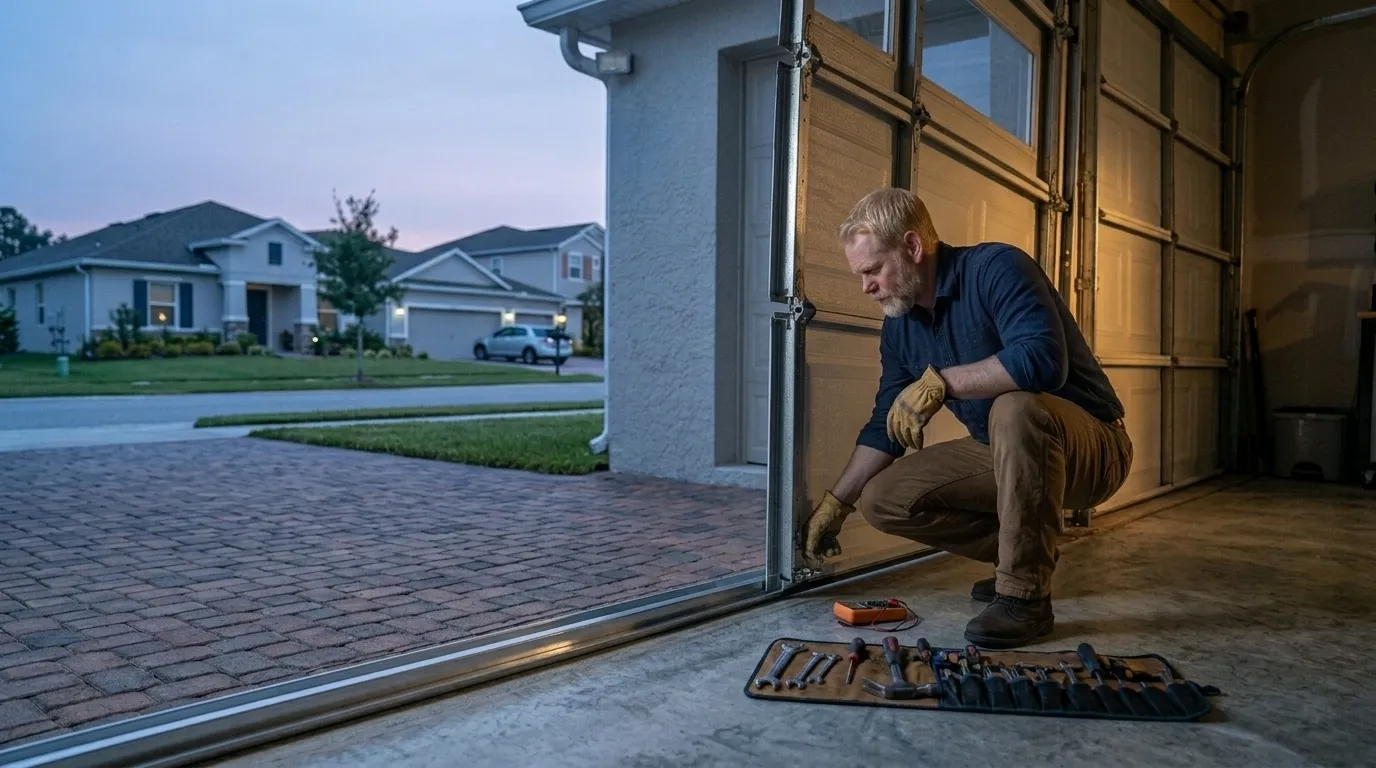
A broken spring means the door won't lift, or it lifts a few inches and stalls - that's not a job to put off, since forcing an opener to fight a dead spring burns out the opener motor next. When you call, tell us whether you've got one long door or two single doors, since that affects whether you're dealing with one spring or a pair.
We ask a few questions up front: is the door stuck open or stuck shut, is there a loud bang you heard, and roughly how old the door is. If you know your house was built in the 1980s or 90s, that's useful - it tells us the spring is likely original equipment and due for full replacement rather than a patch.
One honest limitation: if the torsion tube, drum, or cable has been damaged by the spring failure - which happens sometimes when a spring snaps under load - that adds parts and time beyond a straight spring swap. We won't know the full scope until we're looking at the hardware in person, so a phone quote for anything beyond the spring itself is a rough range, not a fixed number.
What You Pay
We don't publish a flat number here because spring jobs vary by door weight, whether it's one spring or two, and whether the drums or cables need replacing alongside it - and we'd rather quote you an accurate number on site than a headline figure that doesn't match your door. What we can tell you is the shape of the decision: with median household income in the area around $60,543, most owners here are weighing a spring repair against a full opener or door replacement, and for a door that's otherwise sound, replacing just the spring is almost always the cheaper and faster fix.
Where it stops making sense to just replace the spring is when the door itself is failing - bent track, delaminating panels, a worn-out opener from the same era as the spring. At that point you're paying for a spring today and a door next year, and we'll say so rather than sell you the smaller job twice.
What You Are Seeing
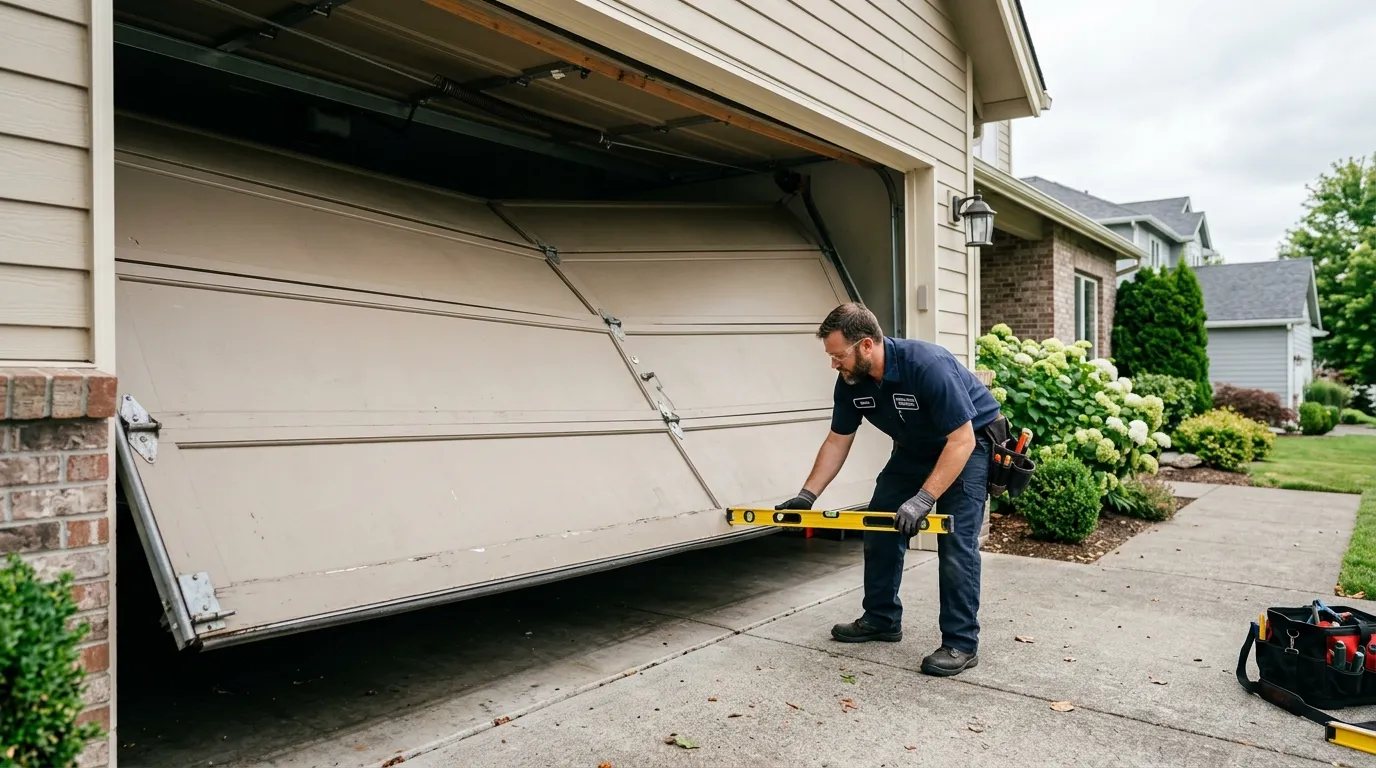
The clearest sign is a door that won't budge, or one that goes up a foot and stops - that's a dead torsion spring, full stop. A loud bang from the garage, especially in the morning or evening when the temperature swings a little, is usually the spring letting go under tension, not an intruder or a car backfiring.
A cable that's gone slack on one side while the door hangs crooked is a related but different problem - broken cable, not necessarily broken spring, though the two often show up together on an older door. If the opener strains, reverses, or the remote does nothing but you hear the motor try, that's consistent with a spring that's lost tension gradually rather than snapped outright, which does happen on some doors as the coil weakens.
Don't try to lift a stuck door by hand repeatedly or force the opener with the manual release pulled - a spring under partial tension is dangerous, and this is one of the few garage repairs where waiting for a call rather than DIY is the right move for most owners.
Why The Villages Calls Us
Talk to a Technician Before You Book
Describe what the door is doing and get a straight answer on what it likely needs.
Jobs Like Yours
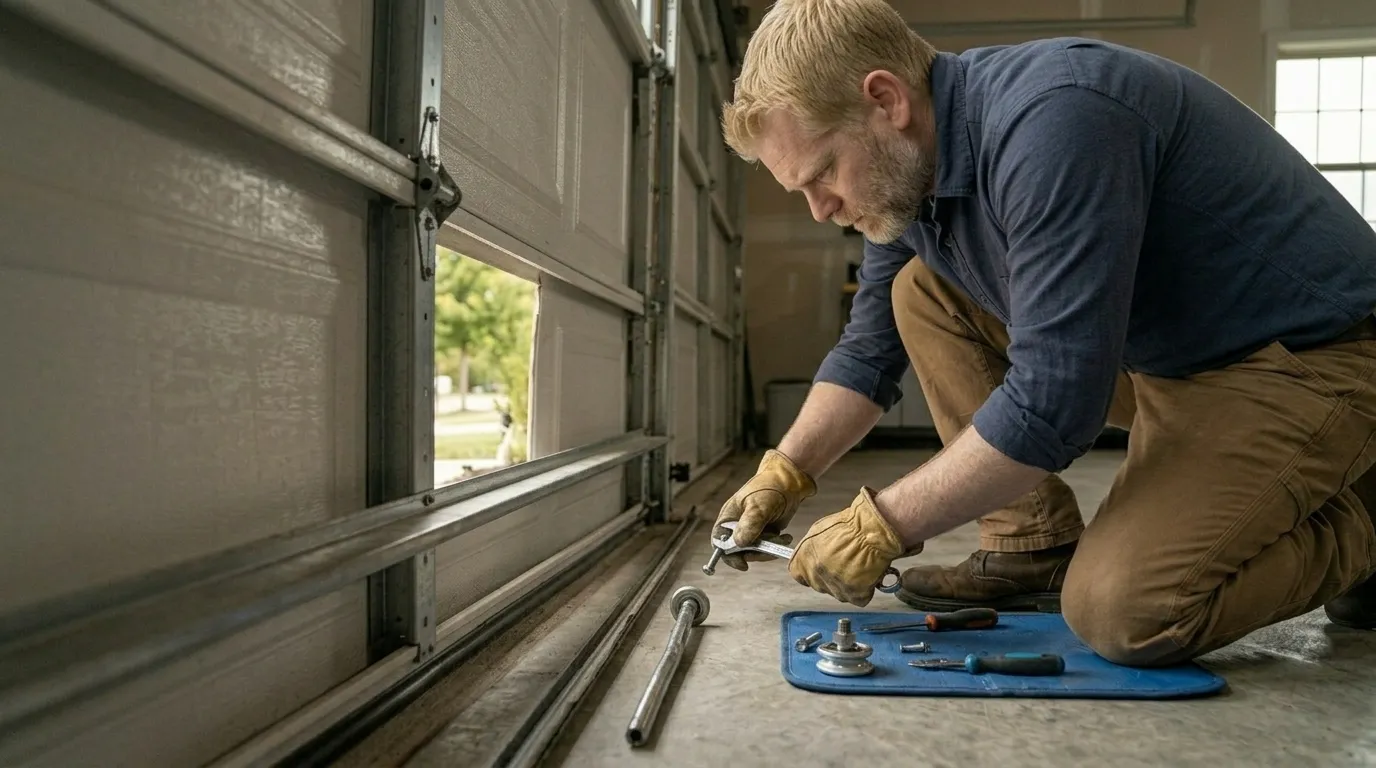
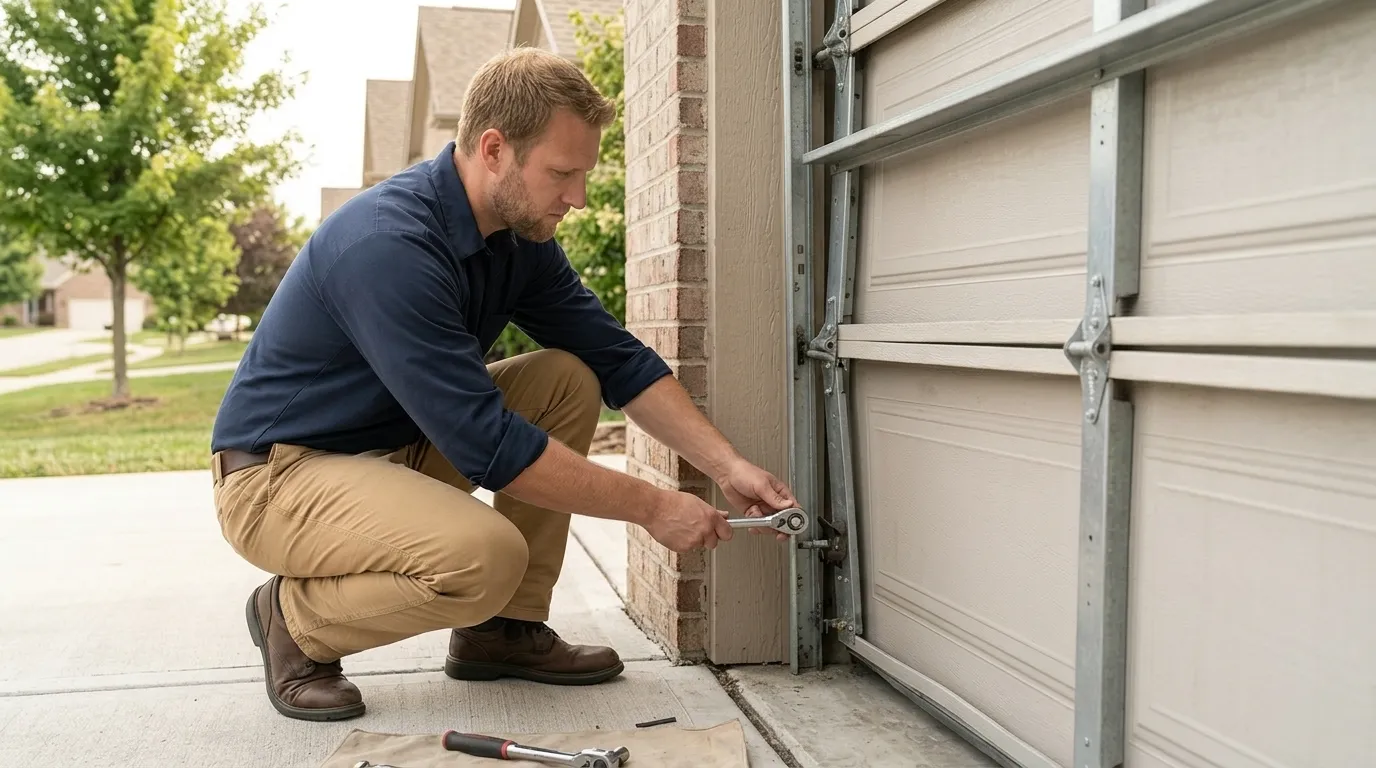
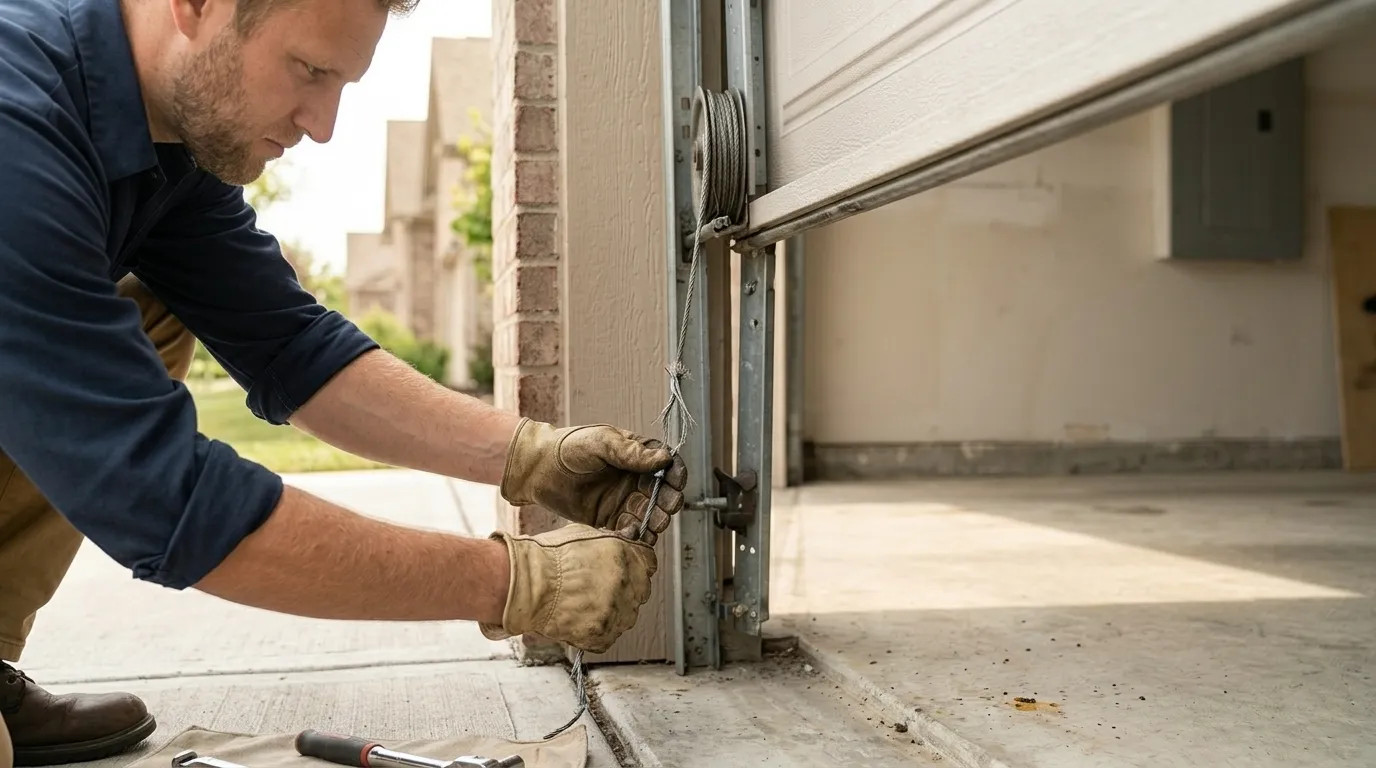
Recent work from this service line.
Frequently Asked Questions
How do I know if it's the spring and not the opener?
If the door won't move at all, or the opener motor runs but the door doesn't lift, that points to the spring, not the opener. Openers aren't built to lift a door with a dead spring - they'll strain, buzz, or trip a safety sensor instead. A visible gap in the coil above the door is the giveaway if you can see it safely.
Why did my spring break with no warning?
Torsion springs fail by cycle count, not by age alone, and a lot of springs in this area date to when the house was built between 1973 and 2015. Once a spring hits its rated cycle limit, it can go on any ordinary open or close - there's rarely a slow leadup you'd notice beforehand.
Can I replace just one spring if I have two?
You can, but most shops recommend replacing both at the same time on a double-spring door, since the second spring is usually close to the same age and cycle count as the one that broke. Doing one now often means a second call within a year or two.
Is spring repair something I can do myself?
We wouldn't recommend it. A torsion spring under tension can cause serious injury if it releases wrong, and the tools to wind it safely aren't things most homeowners keep around. This is one of the few garage door jobs where calling in a pro is worth it even if you're handy.
Need Garage Door Spring Repair Across The Villages?
Call now for straight answers on cost and timing.