
The Villages Garage Door Guide
Openers, Power Cuts, and the Homes of The Villages
How aging openers and power interruptions affect homes in The Villages, built mostly 1973-2015, and what to check before you call a tech.
- Licensed & Insured
- Same-Area Service Calls
- Upfront Pricing
The Situation
Most homes here went up between 1973 and 2015, with the typical house dating to about 1987. That matters more than it sounds like it should, because a house built in the mid-80s almost certainly got its garage door opener installed around the same time, or maybe replaced once in the 2000s. Either way, a lot of those units predate the battery-backup requirement that's standard on new openers now.
When the power drops, even for a few minutes, an opener without backup just stops. No light, no remote, no keypad. The door itself is fine.
It's the motor that's dead in the water until the grid comes back or someone pulls the manual release.
Across the 16 named areas that make up this stretch of Central Florida, the housing stock runs mostly 1980s and 90s construction, which means this isn't a problem limited to one neighborhood or one street. It's a generation of openers all aging out around the same time, in houses built close enough in age that a lot of owners are dealing with the exact same part failing in the exact same decade. That's worth knowing before you assume your unit is a one-off.
How Local Conditions Play In
The Villages sits in a mild temperate band, so you're not fighting the freeze-thaw cycles that crack springs in colder states or the deep cold that stiffens grease and metal. That's a real advantage - torsion springs here don't take the same beating they would somewhere with hard winters. But mild doesn't mean maintenance-free.
Humidity still gets into opener circuit boards and worn weatherstripping still lets moisture reach places it shouldn't. It's a slower kind of wear, not a dramatic one, which is part of why people miss it until the opener just quits mid-cycle.
We don't have data here on storm frequency or outage counts for this area, so we won't guess at how often the power actually goes out or why. What we can say is that when it does go out, a door built to modern code standards has a fighting chance of still opening manually and cleanly, while an older, sagging door on tired hardware turns a simple outage into a two-person wrestling match with a manual release cord.
When to Call Someone
Call when the opener hums but the door doesn't move - that's usually a stripped gear or a capacitor going, and it's not a fix you want to learn on a ladder. Call when the door reverses on its own before it touches the floor, since that's a safety sensor or limit setting, not something to override. And call when you've pulled the manual release during a power cut and the door won't lift by hand either - at that point you likely have a broken or overloaded spring, not just a dead motor, and that's a two-person job with the right bar, not a one-person job with a screwdriver.
With a median household income of $60,543 across the service area, replacing a broken opener outright often makes more sense than sinking money into parts for a unit older than the house's own roof. We'll say plainly when a repair isn't worth it rather than billing you for parts on a motor that's going to fail again in a year.
Checking It Yourself
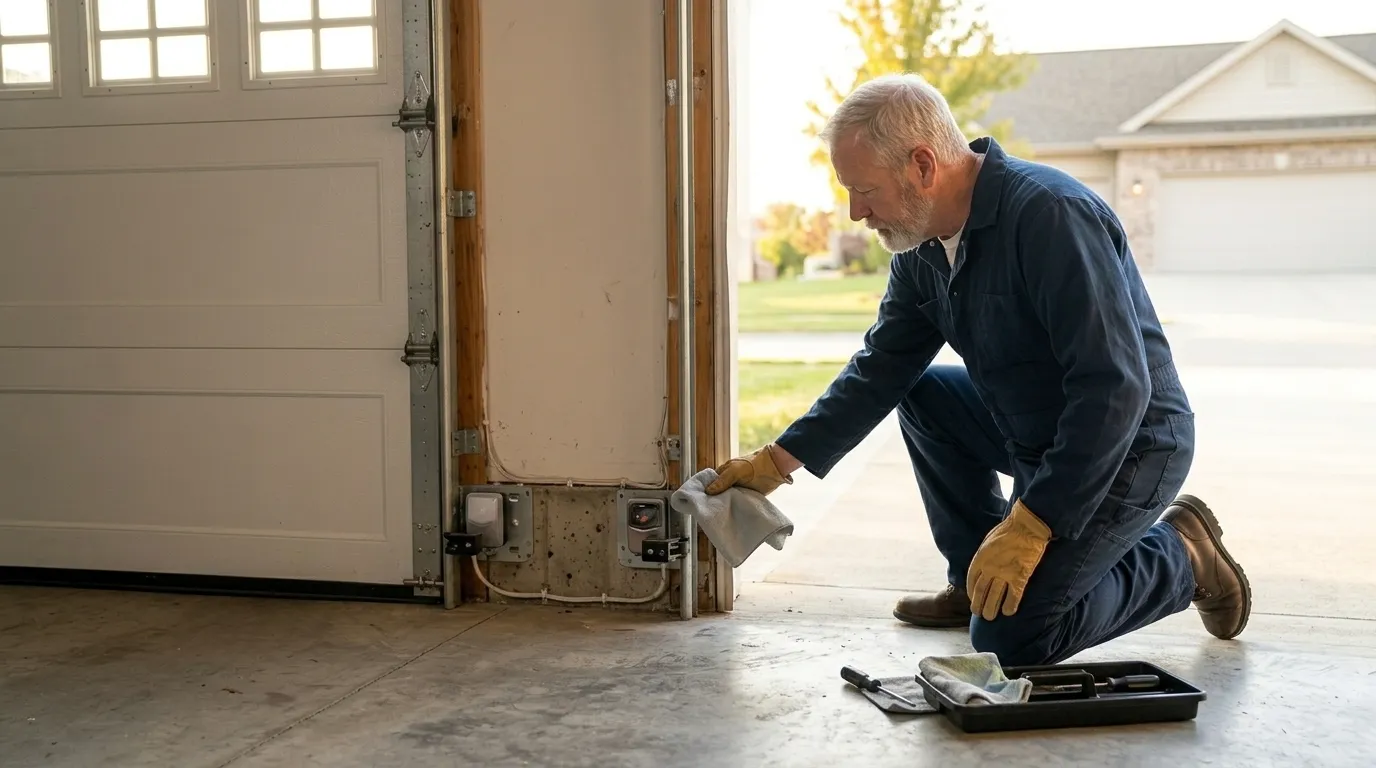
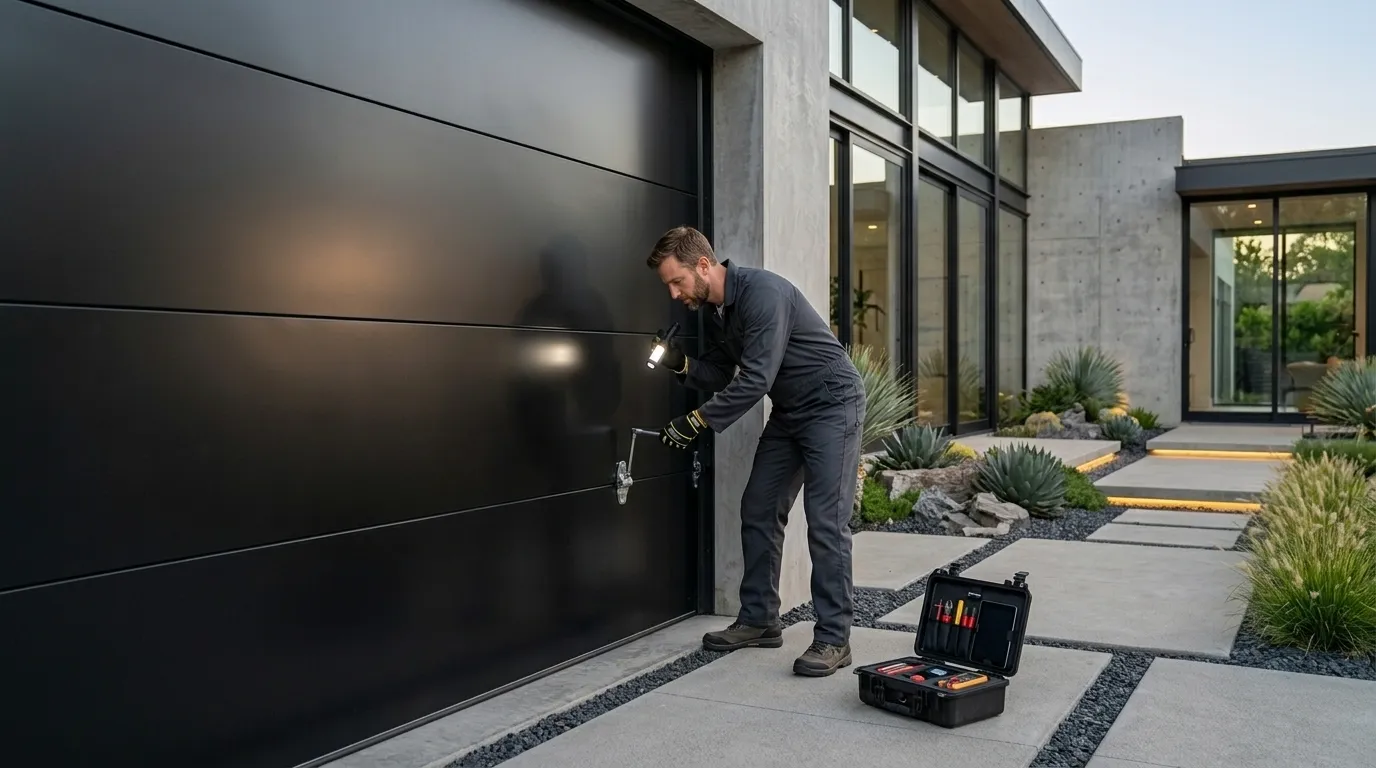
Before you call anyone, find your manual release cord - the red handle hanging near the top of the door - and know how to pull it. That's the single most useful thing during any power cut, regardless of what caused it.
Pull it, and you should be able to lift the door by hand with moderate effort. If it feels like dead weight, stop pulling and don't force it; that's a spring problem, not an opener problem.
Check whether your opener has a battery backup unit, usually a small box mounted next to the main motor housing. If it doesn't, and your house dates to the earlier end of that 1973-2015 build range, that absence is expected, not a defect - it just means the unit predates the code that made backup standard.
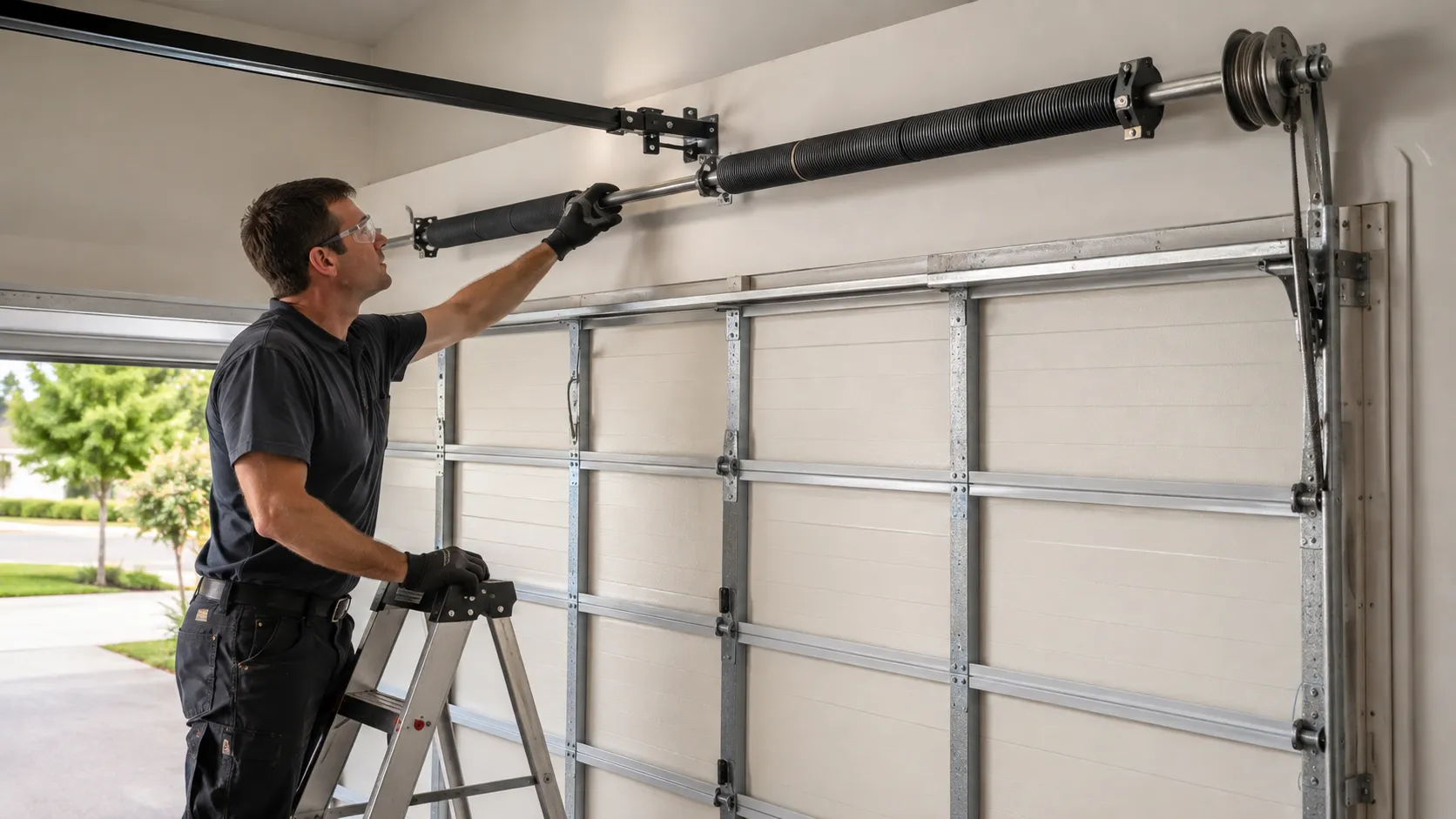
Listen for grinding or a stutter in the chain or belt when it runs on power, and look at the springs above the door for visible gaps in the coils. None of that requires tools, just a flashlight and five minutes.
How We Can Help
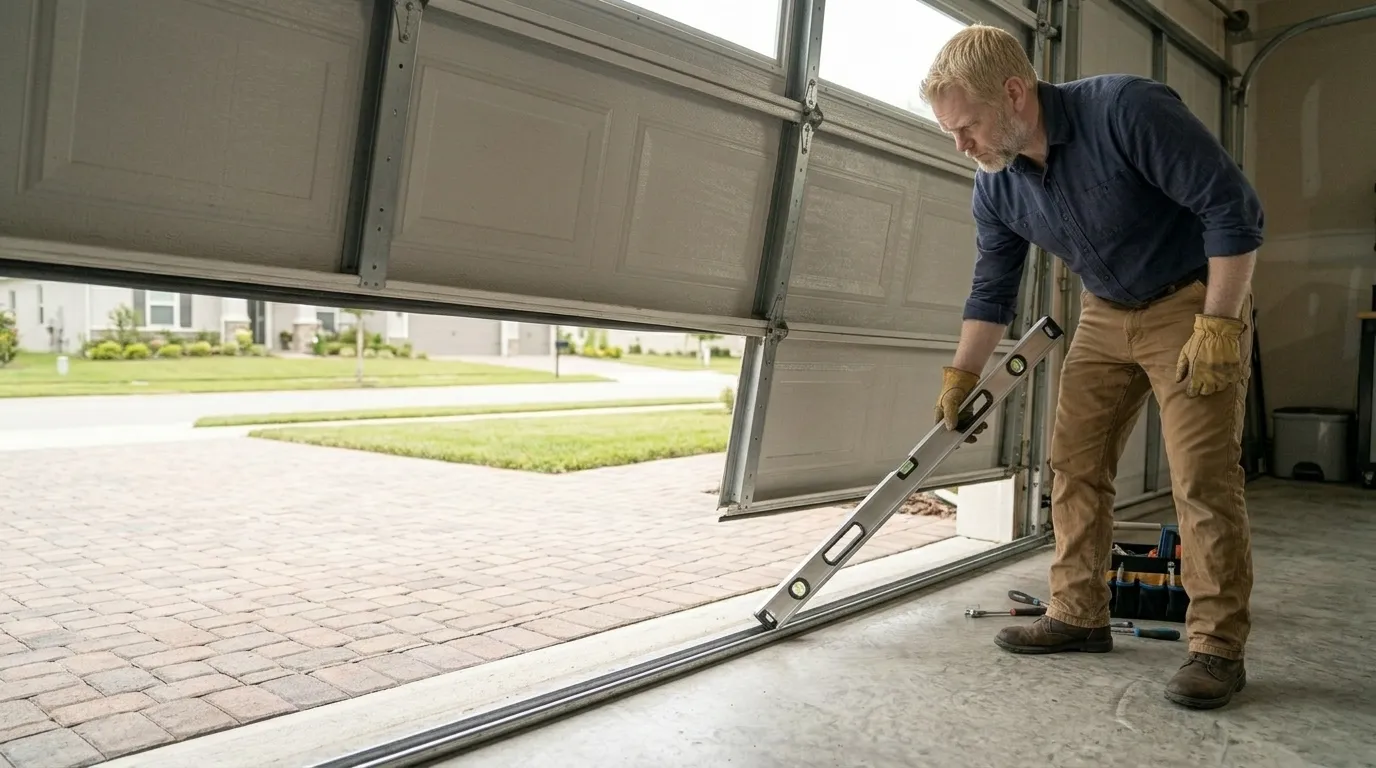
Garage Door Repair
Springs, cables, tracks, rollers, and openers fixed by a tech who explains the problem before touching anything.
Learn more →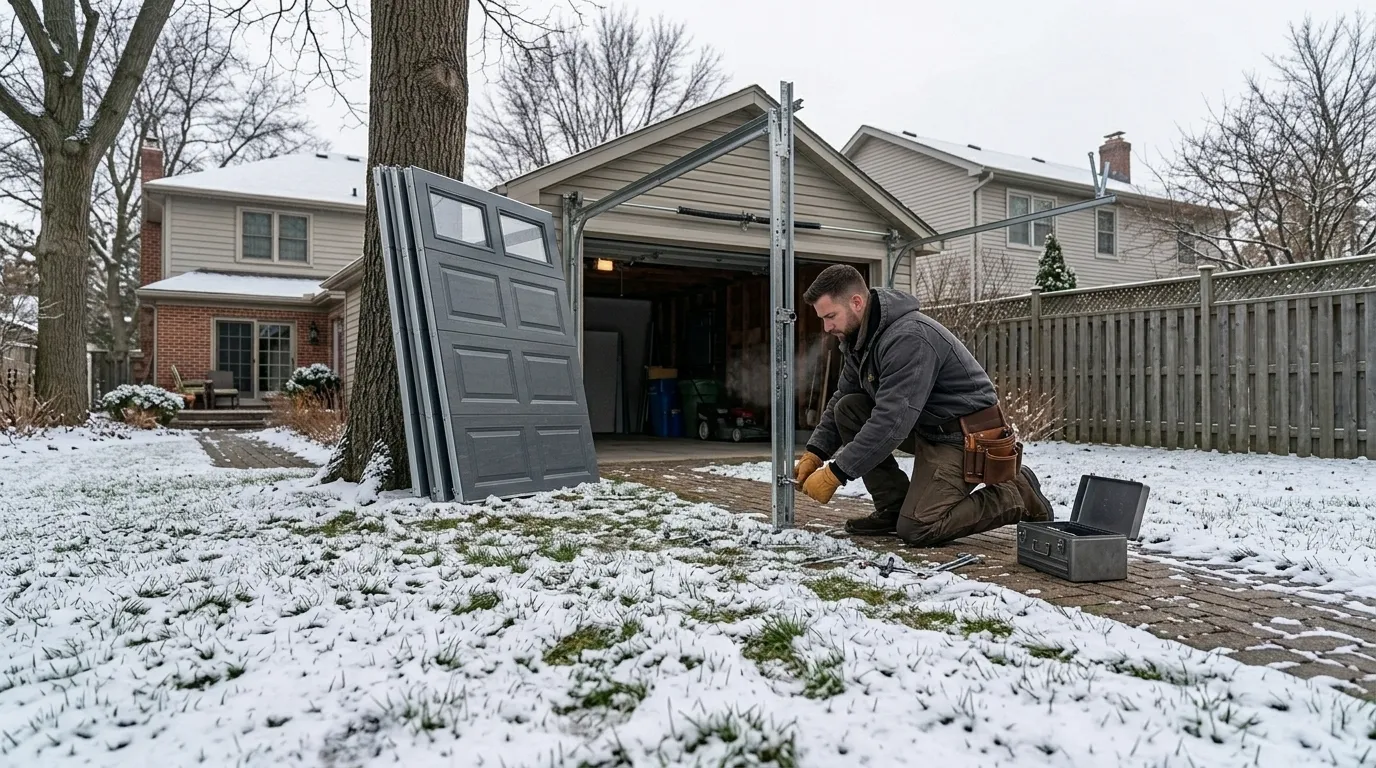
Garage Door Installation
New sectional doors sized and installed for the housing stock actually built in this area.
Learn more →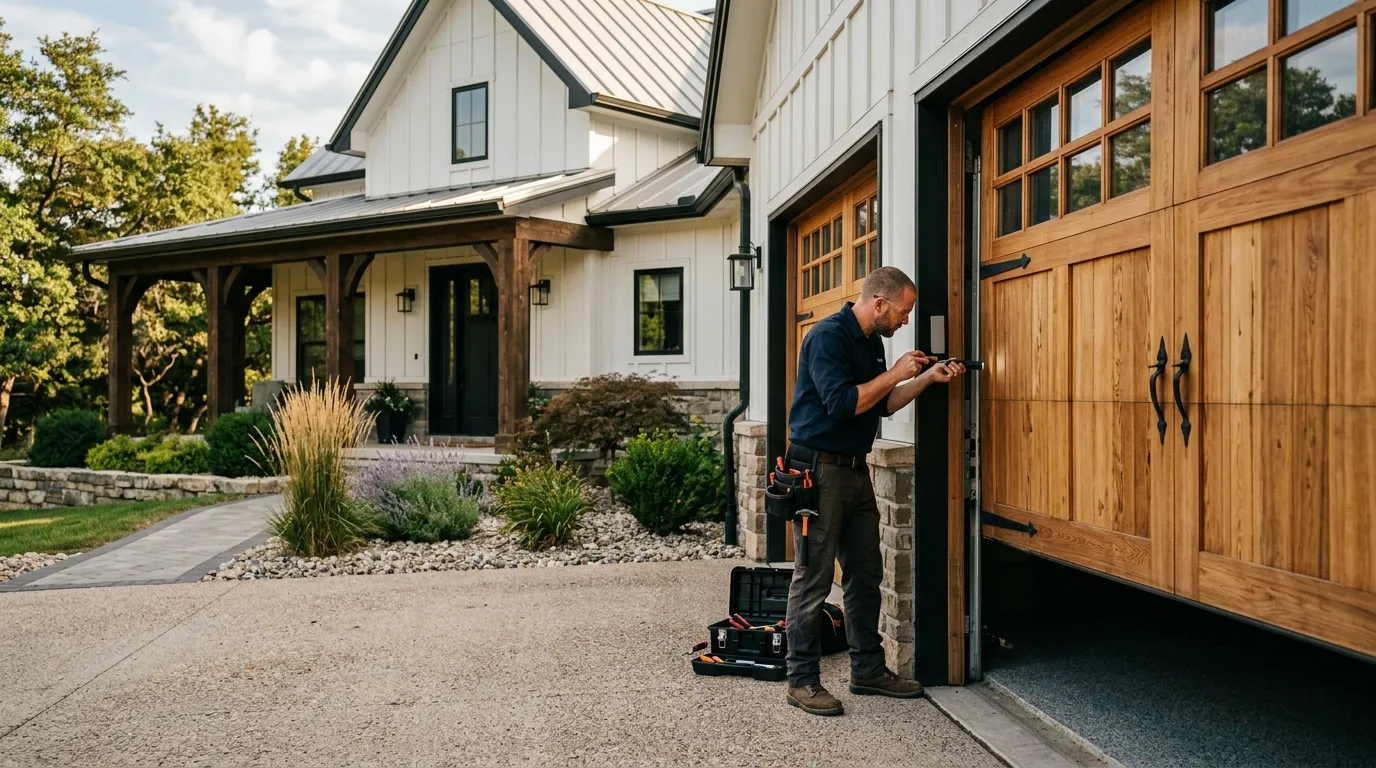
Garage Door Service
Tune-ups, lubrication, and safety checks that catch a small problem before it becomes a service call.
Learn more →Frequently Asked Questions
Why does my garage door opener stop working the moment the power goes out?
If your opener doesn't have a battery backup unit, it has no power source once the grid drops, so the motor simply stops. This is common in homes here built before battery backup became standard, since the typical house in this area dates to around 1987. The door itself still works by hand using the manual release.
Does the mild climate here mean less spring wear?
It helps. Torsion springs take more damage from repeated freeze-thaw cycles than from Central Florida's mild temperate conditions, so springs here tend to wear more from age and cycle count than from weather extremes. That said, humidity still affects opener electronics and weatherstripping over time.
My house is from the 1980s - should I worry about the opener specifically?
An opener installed with an 80s or 90s build almost certainly lacks battery backup and may be running on original gearing decades past its expected life. It's worth checking the manufacture date on the unit itself, since motor age matters more than house age once you're past the 15-20 year mark.
Is it ever not worth repairing an old opener?
Sometimes, yes. If the motor is original to a house built in the 1980s or early 90s, sinking money into a new circuit board or gear kit on a unit that old often costs close to a full replacement anyway, and you're still stuck without backup power. We'll tell you when that's the case rather than sell you a patch.
Have a Door That Needs a Second Opinion?
Call and describe what it is doing - we will tell you what it likely is.