
The Villages Garage Door Guide
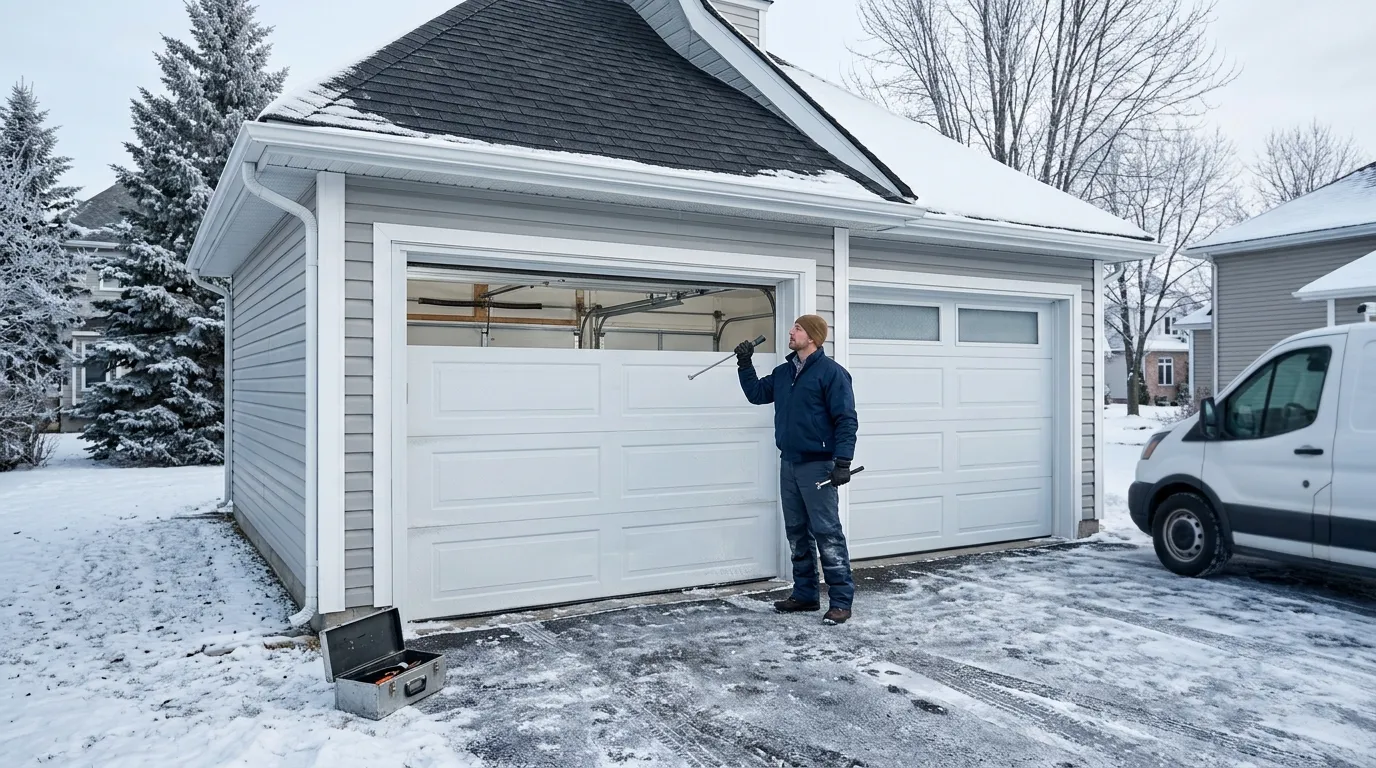
When a Spring Goes in Cold Weather Around The Villages
Homes here date mostly from the 1980s and 90s, built for mild winters. Here's why springs and openers still act up when the temperature drops, and what to check first.
- Licensed & Insured
- Same-Area Service Calls
- Upfront Pricing
The Situation
Most doors in this part of Florida went up between 1973 and 2015, with the bulk of the stock dating to the 1980s and 90s. That matters because these are original-era torsion springs and openers in a lot of houses, thirty-plus years of daily cycling on the same coil. A spring doesn't care that our winters are mild.
It cares about metal fatigue, and a spring installed in 1988 has had a long run by now regardless of climate. When it finally lets go, it's usually not a surprise so much as the last cycle after thousands. Owners here tend to notice it first as a door that feels heavier one morning, or a bang from the garage that wasn't there the day before.
Because this area is spread across sixteen named communities with housing built in roughly the same 1980s-90s window, a lot of neighbors are sitting on springs from the same era, which is why you'll hear about several houses on one street having the same problem within a season of each other. It's not a coincidence. It's the same builder-grade coil hitting the same age at close to the same time.
How Local Conditions Play In
This area sits in a mild temperate band, so we don't get the hard freezes that make steel brittle the way a northern winter does. That's the good news. But mild doesn't mean static.
Overnight lows that dip even into the 30s and 40s a handful of times a season are enough to stiffen the lubricant on an older spring and tighten the tolerances on a track that's been running loose for years. A spring near the end of its life under normal conditions can go on the one cold morning that adds just enough extra tension to finish the job. If your house falls in that 1973-2015 build window, and especially if it's original hardware from the 1980s or 90s, a cold snap is often when the weak point shows itself, not because cold breaks springs on its own, but because it's the final variable on a part that was already close to done.
When to Call Someone
Call before you touch anything if the spring has visibly separated, if the door is stuck halfway, or if you hear a loud bang followed by the door refusing to move. A broken torsion spring under tension is not a DIY repair. It's also worth calling if your door is original to a house built in that 1980s-90s stretch and you've never had the spring replaced.
At that age, one failure is often a sign the second spring on a double-spring setup isn't far behind, and replacing both at once beats a second call a few weeks later. If your opener is straining, reversing early, or the door drifts down on its own, that's a spring losing tension gradually rather than snapping outright, and it's still worth a look before it fails at a worse moment.
Checking It Yourself
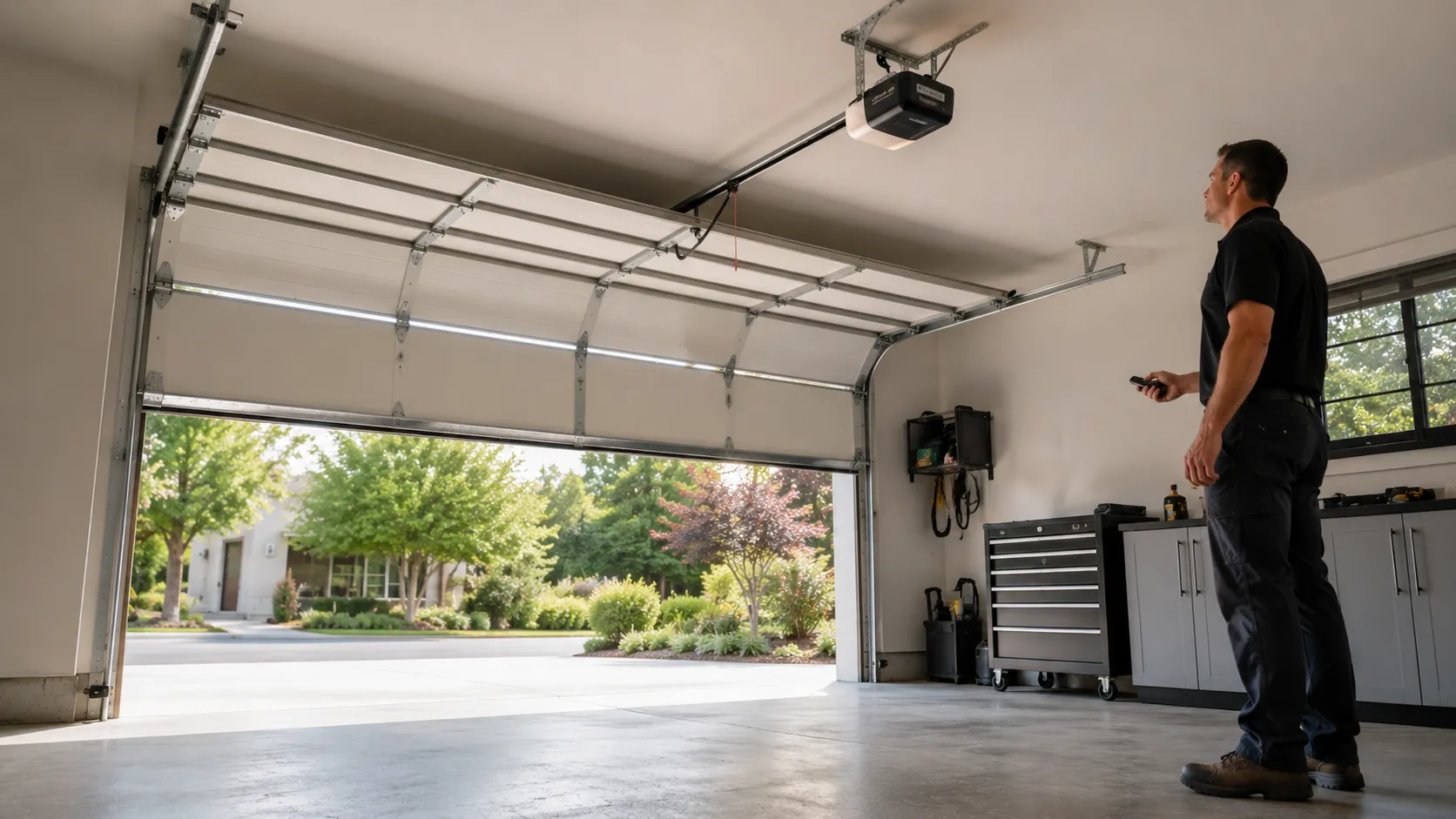
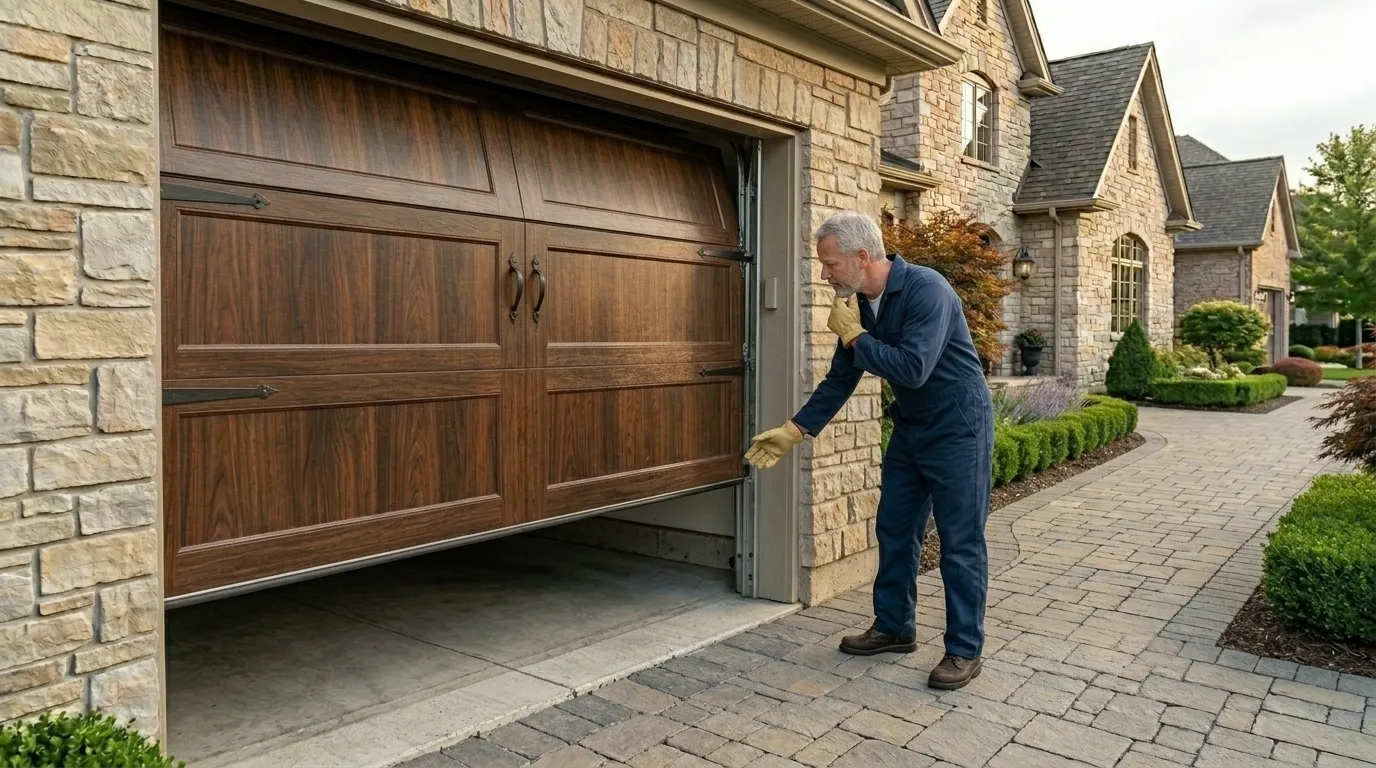
Before calling, you can rule out a few things safely. Look at the spring itself, mounted above the door on the horizontal shaft. A gap in the coil, even a small one, means it's done and the door shouldn't be opened again until it's replaced.
Check whether the door is balanced by disconnecting the opener (pull the release cord) and lifting by hand halfway. It should hold roughly in place. If it drops or shoots up, the spring tension is off and that's a job for someone with the right bars and clamps, not a ladder and a guess.
One honest limit here: if your springs are original to a house from that 1973-2015 build era and haven't been serviced, we're not going to tell you a five-minute fix will hold. At that age, replacement is usually the honest answer, not another patch.
How We Can Help
Garage Door Repair
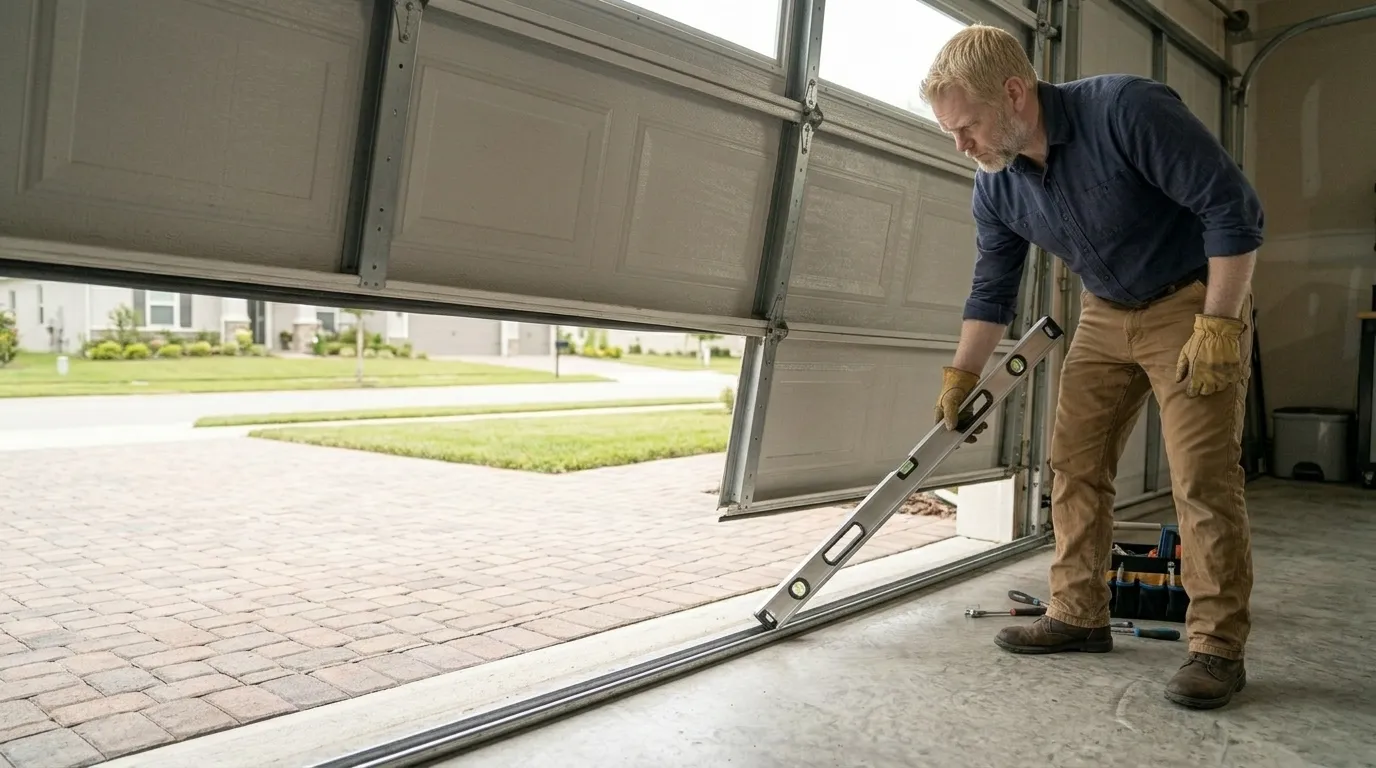
Springs, cables, tracks, rollers, and openers fixed by a tech who explains the problem before touching anything.
Learn more →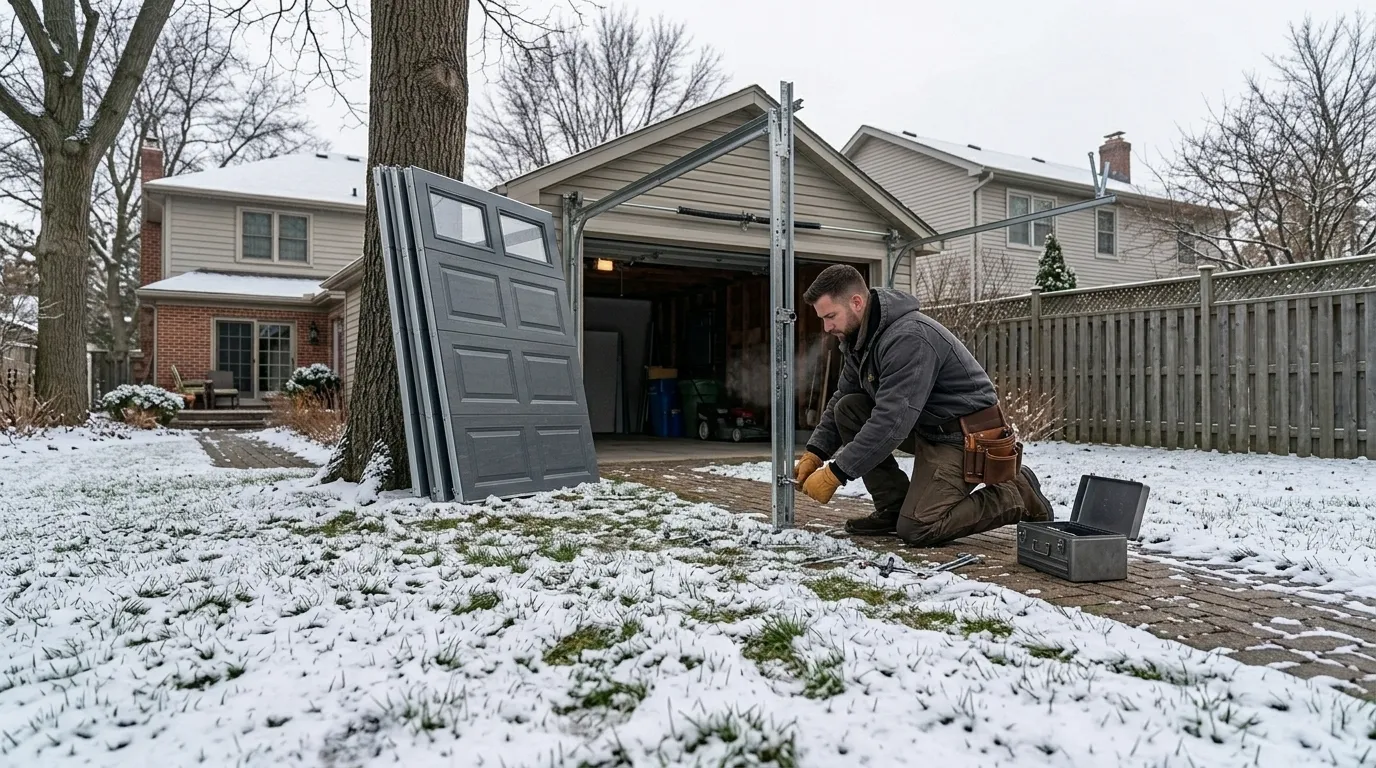
Garage Door Installation
New sectional doors sized and installed for the housing stock actually built in this area.
Learn more →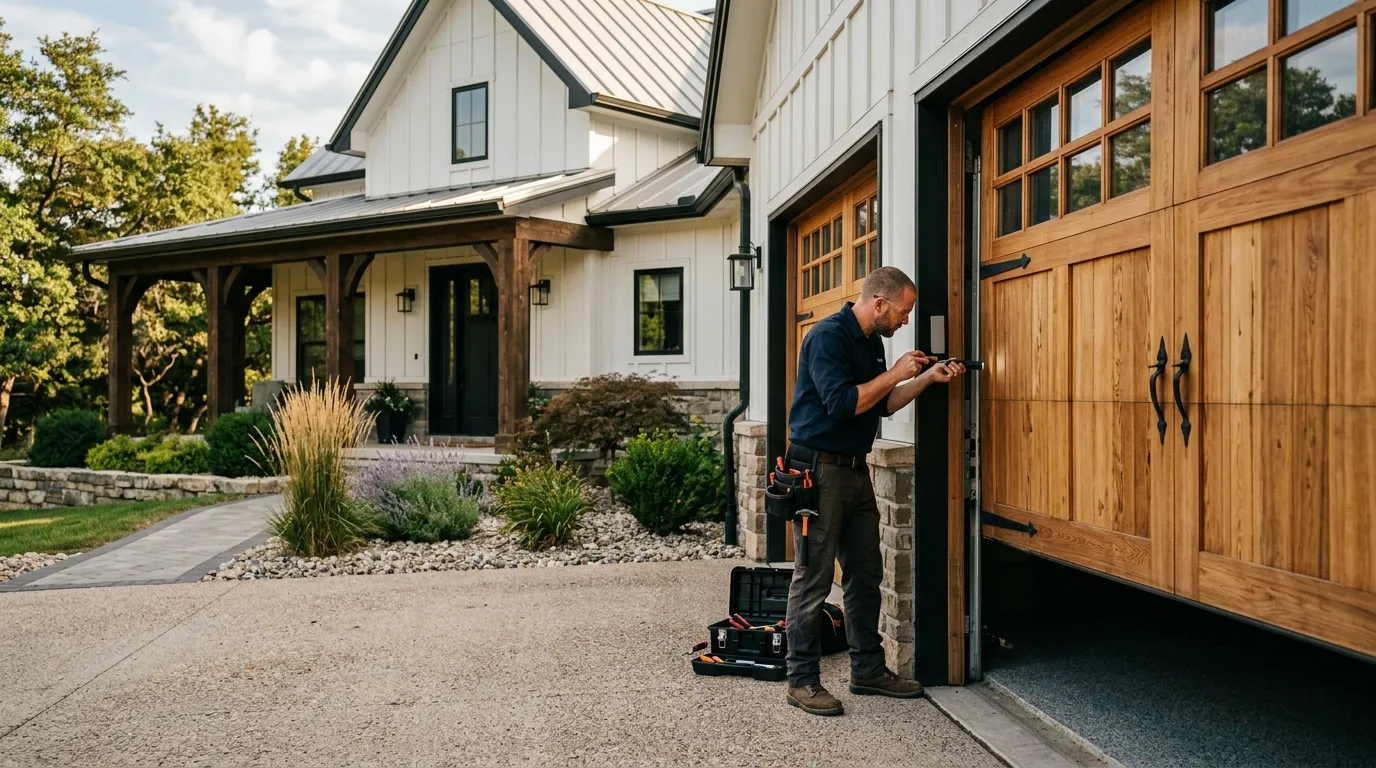
Garage Door Service
Tune-ups, lubrication, and safety checks that catch a small problem before it becomes a service call.
Learn more →Frequently Asked Questions
Do garage door springs really fail more in cold weather here?
Not because of extreme cold, since this area stays in a mild band. It's more that a spring near the end of its life, common in houses built in the 1980s and 90s, finally gives out on the one morning that's cooler and stiffer than usual. The cold is the trigger, not the cause.
How old are most garage doors in this area?
Housing across the service area was built mostly between 1973 and 2015, with the median falling around 1987. That means a large share of doors and their original torsion springs are from the 1980s and 90s builder-grade hardware, which is well past the point most springs are designed to last.
Is it normal for several neighbors to have the same spring problem around the same time?
Yes, and it's not a coincidence. Whole sections of this area were built out in the same 1980s-90s window, so a lot of houses are running springs of nearly identical age. When one starts failing, it's common to hear about others nearby within the same season.
Have a Door That Needs a Second Opinion?
Call and describe what it is doing - we will tell you what it likely is.