
The Villages Garage Door Guide
Is Your Garage Door Worth Repairing? A Villages Homeowner's Guide
A look at when a garage door built in this area's 1973-2015 housing boom still makes sense to repair, and when the parts and the climate tell you otherwise.
- Licensed & Insured
- Same-Area Service Calls
- Upfront Pricing
The Situation
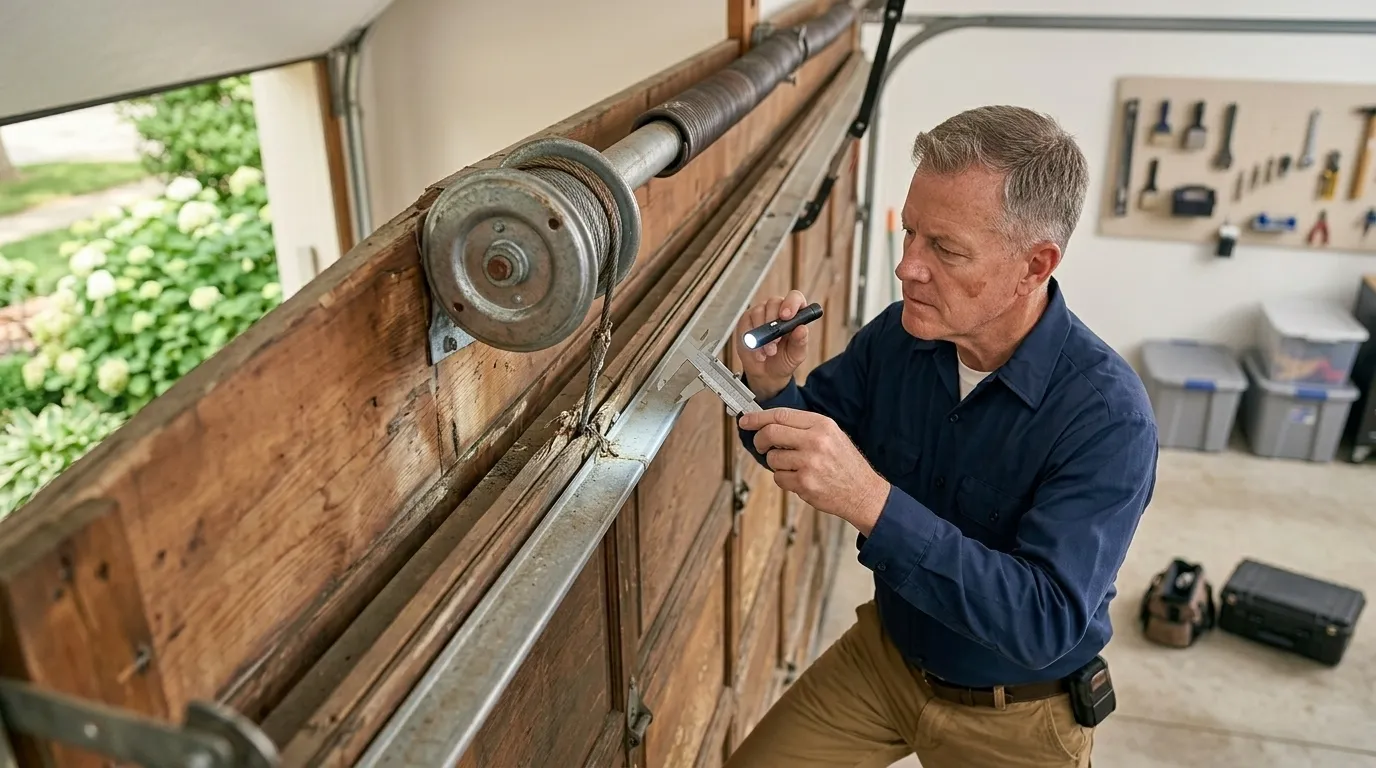
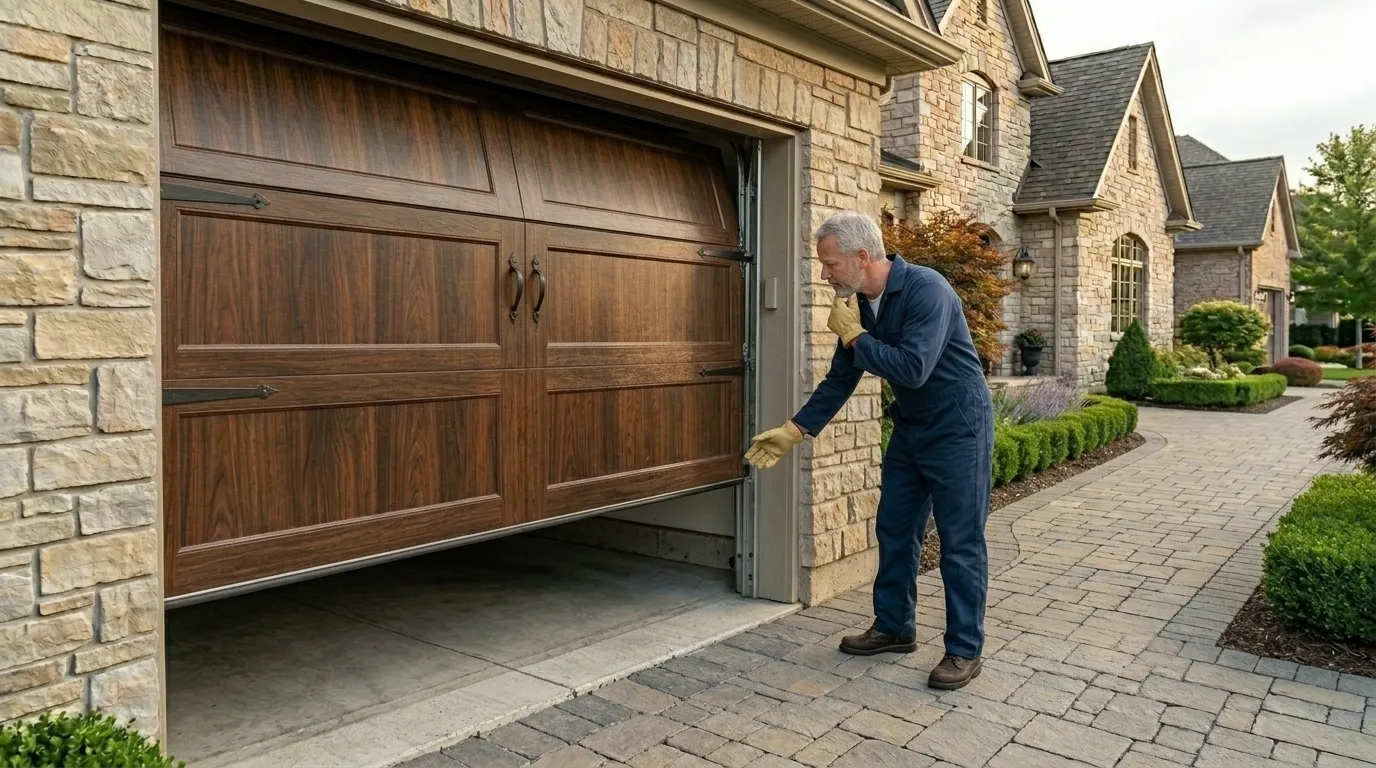
Most of the housing across this area went up between 1973 and 2015, with the typical build year landing around 1987. That's a wide window, but it means a huge share of garage doors out there are original equipment from a build boom that's now 10 to 50 years behind us. A door installed when a section of a community went up in the late 80s or early 90s is carrying springs, cables, and an opener that were never meant to run forever.
Across the 16 named areas that make up this market, the stock skews heavily toward that 1980s-90s construction era. That matters for repair decisions because it means a lot of doors are aging out of their hardware life at roughly the same time, not spread evenly across decades. If your neighbor's spring just broke and your door is the same age, don't be surprised if yours is next.
The question isn't just how old the door looks. It's whether the track, springs, and opener motor are original to that build year, or whether someone already swapped them once. A door that's had one replacement cycle already is a different repair call than one that's never been touched.
How Local Conditions Play In
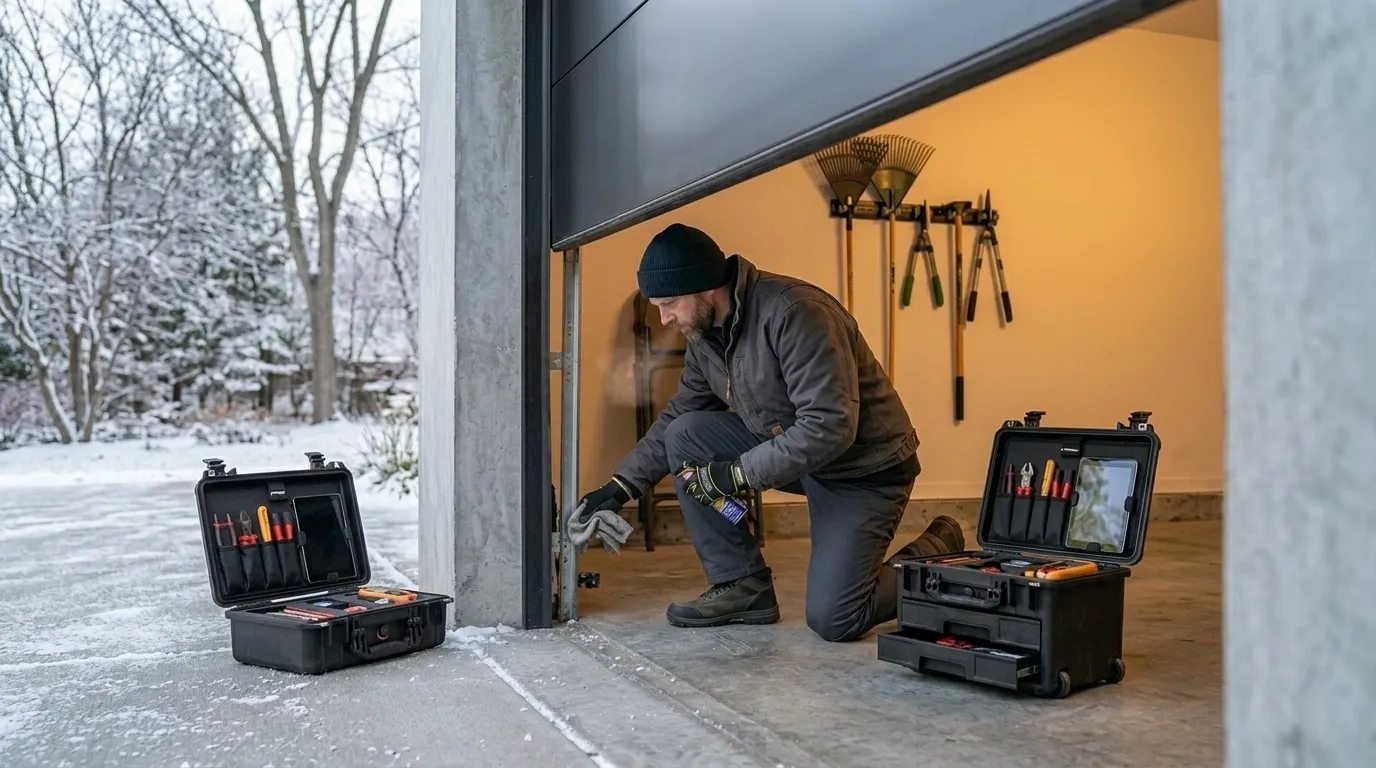
This area sits in a mild temperate band, which spares garage doors the freeze-thaw cycling that cracks panels and seizes hardware up north. You won't see the ice-jammed tracks or frost-warped steel that show up in colder climates. That's the good news.
The less obvious wear here comes from heat and humidity working on rubber and nylon parts rather than metal ones. Foam weatherstripping along the bottom seal and side jambs breaks down under repeated sun exposure faster than it would in a cooler market, even without freezing weather.
Nylon rollers dry out and crack. Lubricant on hinges and torsion springs gets thinned by heat during the day and doesn't hold up the way it would somewhere with a shorter, milder summer.
So a door here that looks structurally fine can still be losing efficiency and quiet operation through seal and roller wear that has nothing to do with the springs. That's worth knowing before you assume a noisy door needs a new spring.
Sometimes it's a $20 part, not a $200 one. The climate here is genuinely easier on doors than most of the country - it just wears different parts than you'd expect.
When to Call Someone
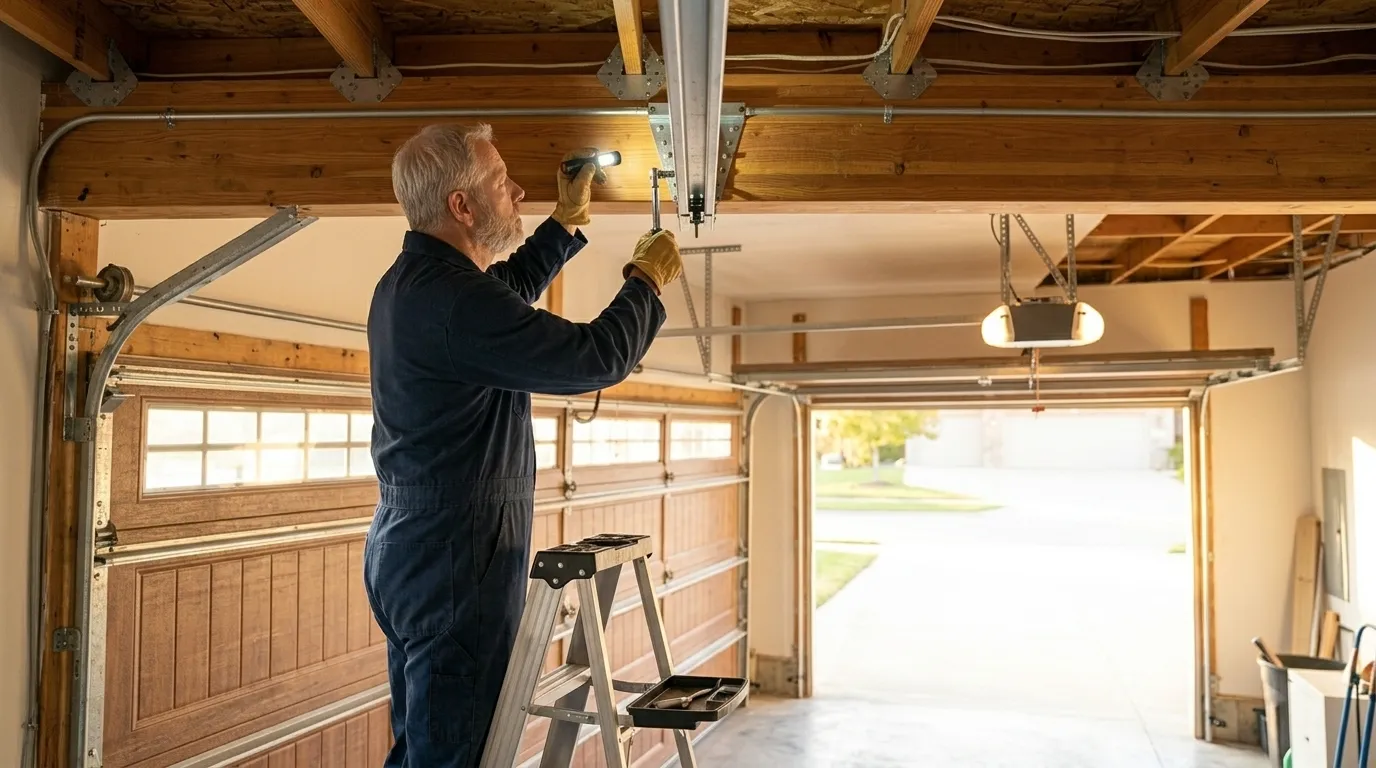
A door that won't stay up on its own, or drops suddenly when you release the opener, has a broken or badly weakened torsion spring. That's not a job to open up yourself - a wound spring under tension can cause real injury, and it's one of the few garage door repairs where we'd tell you flatly to call rather than watch a video and try it.
Same goes for a cable that's frayed or has come off the drum, a bent track that's binding the rollers, or an opener that runs but won't reverse on the safety sensors. Given how much of the stock here dates to that 1973-2015 build window, we're seeing a steady run of doors where the spring and the opener are original and failing close together - if one part is 35 years old, the other usually is too.
Here's the honest limitation: if the door itself has rusted through at the bottom panel or the frame has racked out of square, a spring or cable fix won't save it. At that point we'll tell you replacement is the better money, not talk you into patching something that'll fail again in a year.
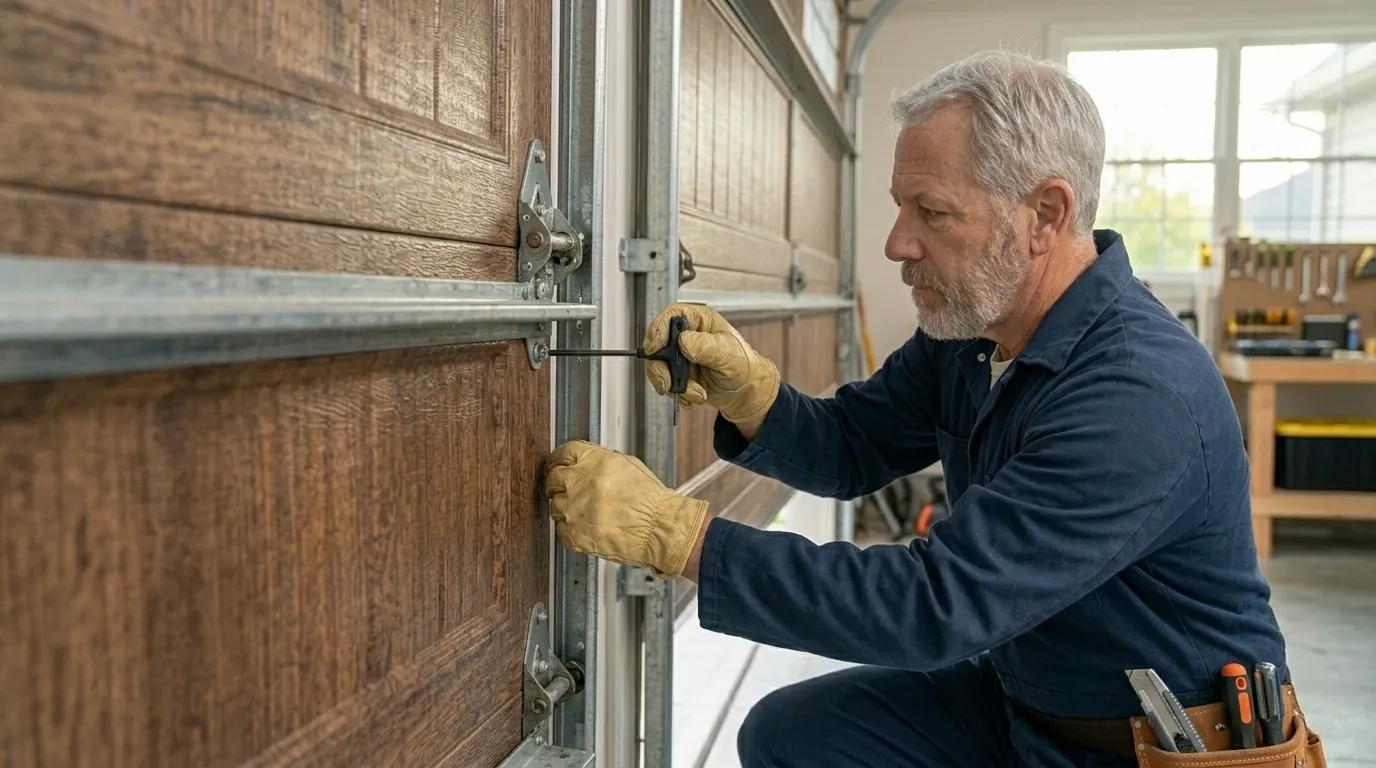
Checking It Yourself
Before you call anyone, a few checks take five minutes and tell you a lot. Disconnect the opener and lift the door by hand.
It should move smoothly and stay wherever you leave it, roughly balanced. If it slams down or you can barely lift it, the springs are shot - that's a call, not a DIY job.
Look at the bottom seal and the weatherstripping along the sides. Given the sun and humidity swings typical here, cracked or flattened foam is common on doors ten-plus years old and is a cheap fix on its own, separate from anything structural.
Listen to the rollers as the door travels. Grinding or a repeated click usually means a roller's dried out or a track bracket has loosened, both fixable without touching the spring system. Check the cables for fraying near the bottom bracket - any visible strands sticking out means that cable's due, and it's worth doing both sides at once since they age together.
If everything moves quiet and balanced and the only issue is cosmetic, that's a door worth keeping. If it's fighting you on every point above, that's the sign it's earned a second opinion.
How We Can Help
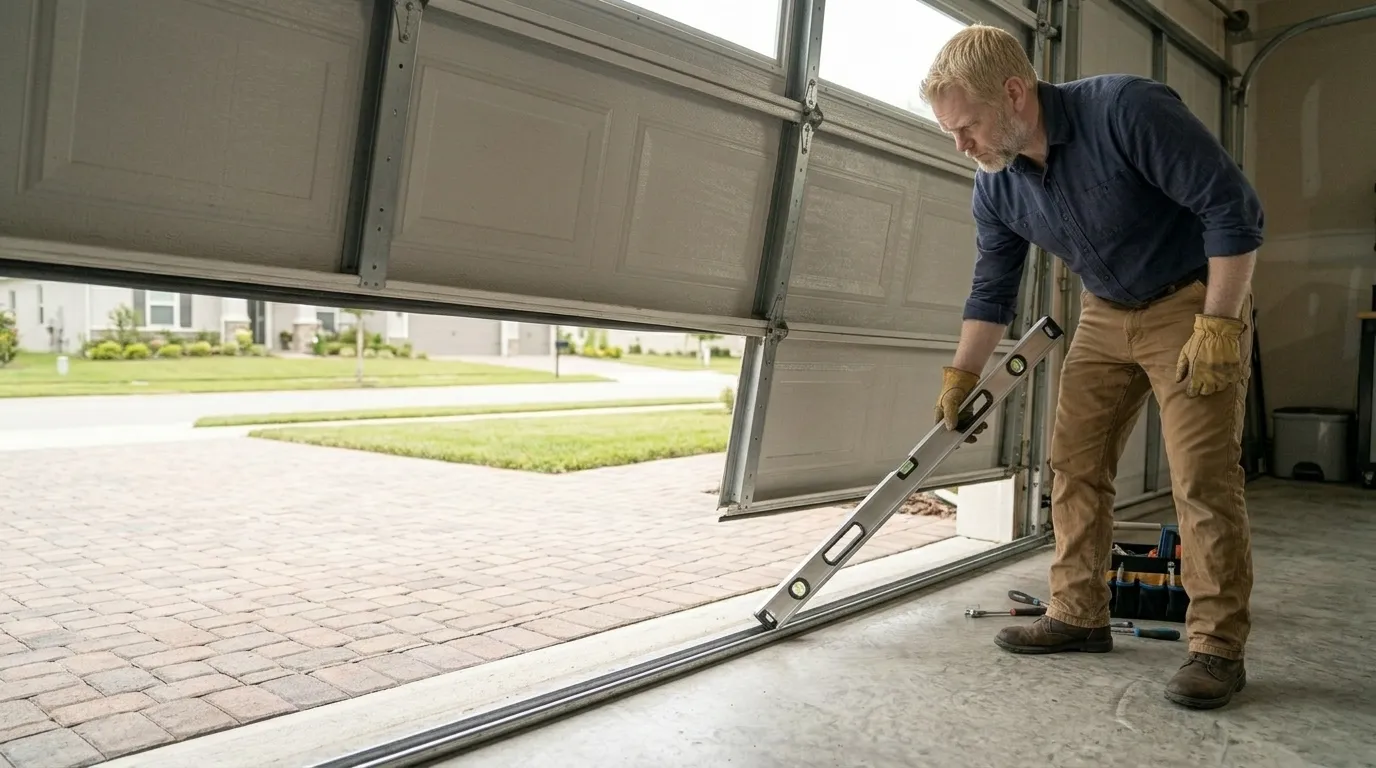
Garage Door Repair
Springs, cables, tracks, rollers, and openers fixed by a tech who explains the problem before touching anything.
Learn more →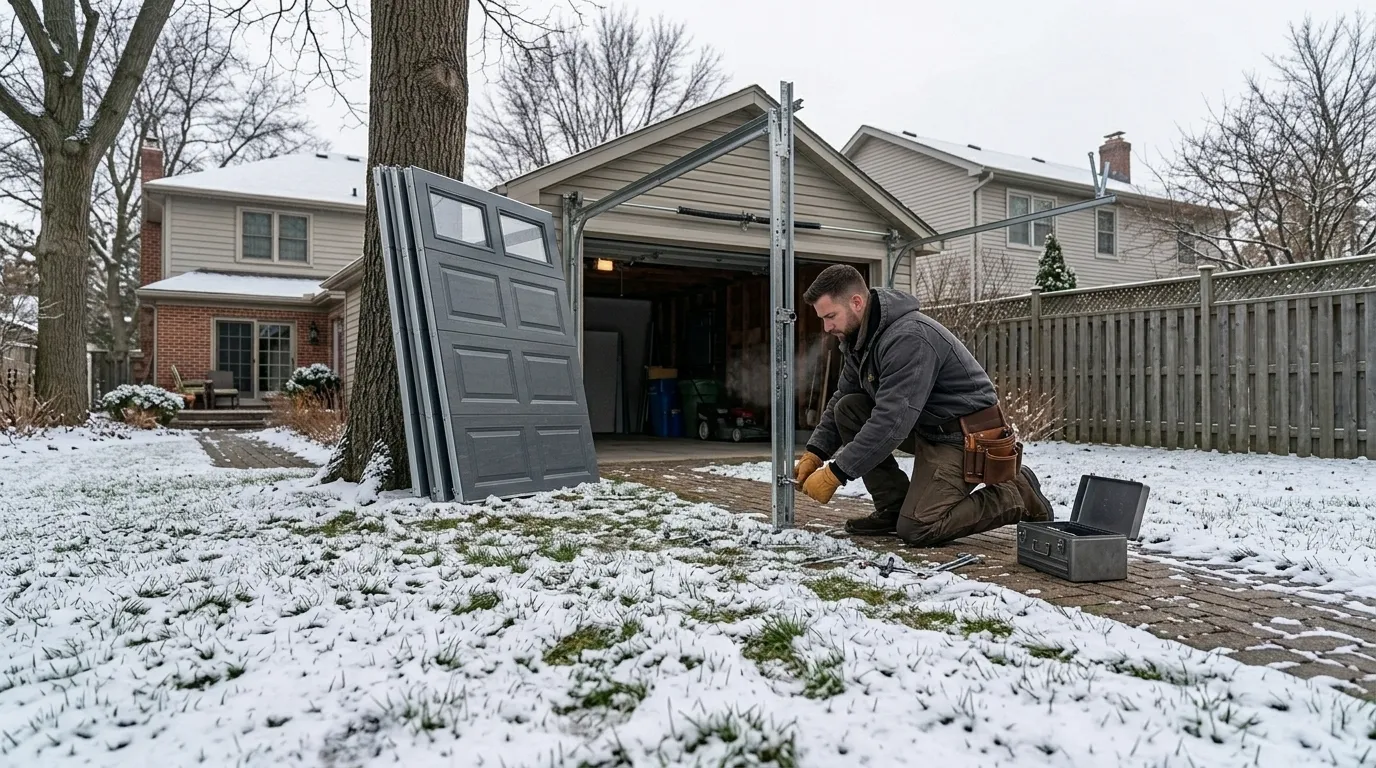
Garage Door Installation
New sectional doors sized and installed for the housing stock actually built in this area.
Learn more →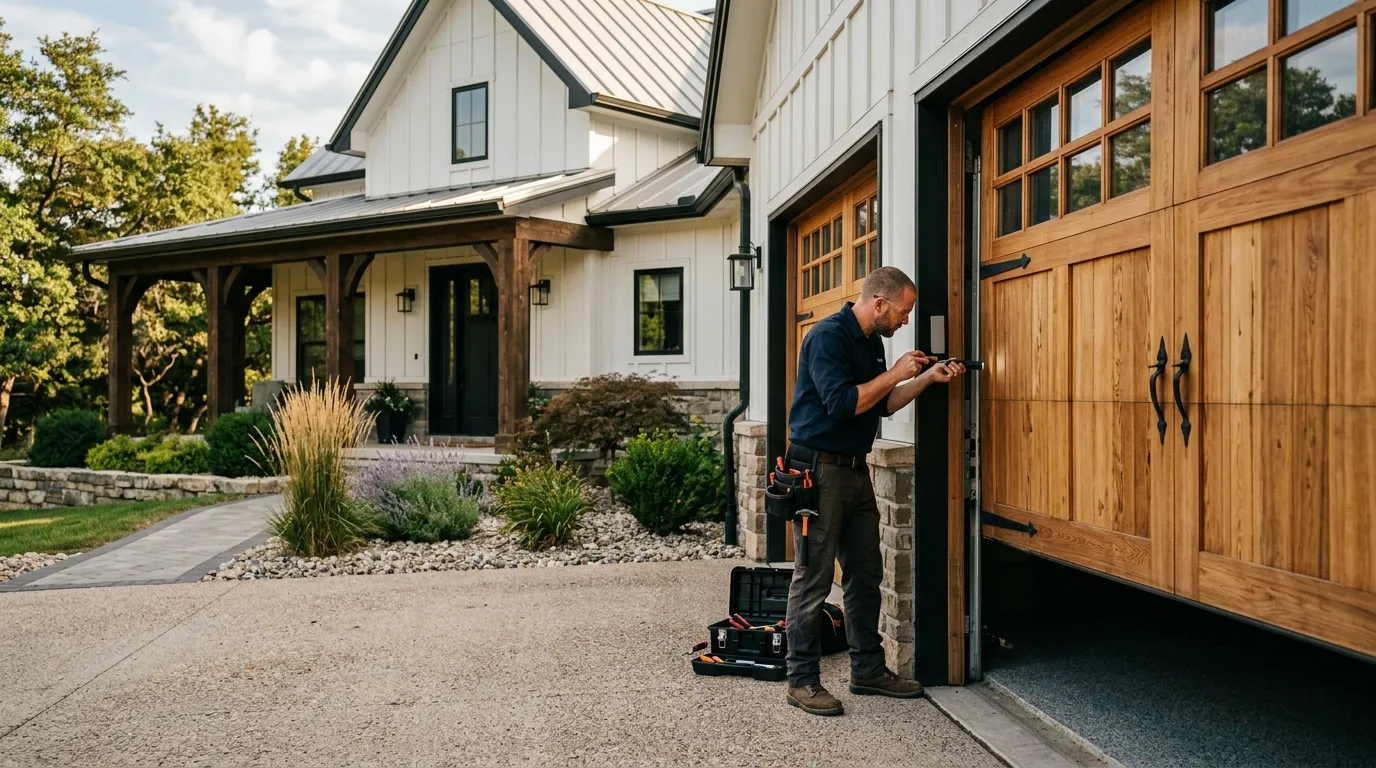
Garage Door Service
Tune-ups, lubrication, and safety checks that catch a small problem before it becomes a service call.
Learn more →Frequently Asked Questions
My house was built in the late 80s and the door has never been touched - is it worth fixing?
Usually yes, if the panels and track are still square. A lot of homes in that 1980s-90s build window are due for their first spring and opener service, not a full replacement. Get the balance and cable condition checked before assuming the whole unit needs to go - original hardware from that era was often built solid, it just needs the wear parts swapped.
Does the climate here shorten the life of a garage door?
Not the way cold climates do. The mild temperate conditions here spare you the freeze-thaw damage that cracks panels up north. What does wear faster is rubber seals, foam weatherstripping, and nylon rollers under repeated heat and humidity - so check those parts specifically rather than assuming the door itself is failing.
How do I know if it's cheaper to fix or replace?
If the frame is square, the track isn't bent, and the panel isn't rusted through, a spring or cable repair is almost always cheaper than replacement. Once the bottom panel has corroded or the frame has racked out of alignment, repairs stop holding and replacement becomes the better use of your money.
Have a Door That Needs a Second Opinion?
Call and describe what it is doing - we will tell you what it likely is.